This article, written by Toni, a mortgage advisor at OHAO, explains how buying your next home before selling your current one actually works and how a bridging loan can help you in this situation.
Life changes, and sometimes you find yourself ready to buy a new home before you’ve sold your current one. When that happens, you need to determine how to finance the new place while you wait for your old home to sell. That’s where a bridging loan comes in. This short-term loan helps you bridge the gap between purchasing your new property and receiving the funds from your old one.
What is a bridging loan and how does it work?
A key part of getting a bridging loan is making sure you can handle all your monthly mortgage payments while you own two homes. This means covering your current mortgage, your new mortgage, and the interest on the bridging loan itself.
Every Dutch lender has its own rules for deciding if you qualify. If you want advice that fits your situation, our mortgage advisors can look at your finances and help you find the best way forward, considering your home’s value, the lender’s requirements, and your timeline.
What are the benefits of buying before selling the old one?
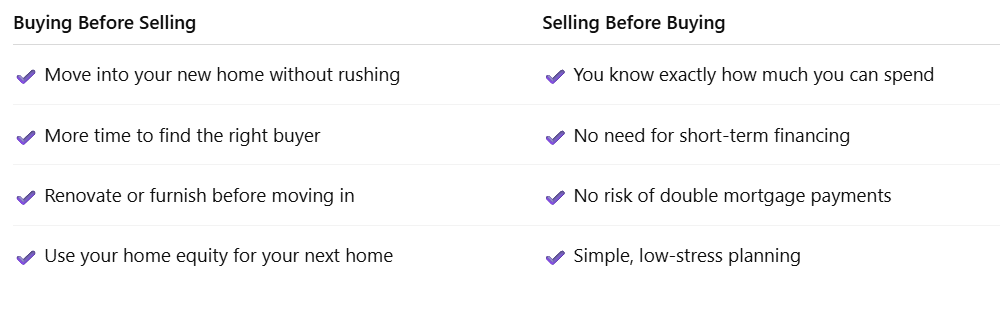
Buying your new home before selling your current one comes with several advantages. First, you have full control over the timing. You can move into your new place without rushing to sell, which reduces stress and gives you more freedom to find the right buyer and negotiate a better price. You can also prepare, renovate, or furnish your new home before moving in, making the transition much smoother.
Another key benefit is that the equity you’ve built up in your current property—your mortgage equity—can help finance your next purchase. This can significantly increase your borrowing capacity and make it easier to afford your new home.
What are the benefits of selling first?
Selling first also has its own advantages. You know exactly how much money you have to spend, and you do not need short-term financing. However, if your next home is not ready, you may not have a place to live for a while, so you might need to rent or find an alternative place to stay.
Buying before selling eliminates some of the guesswork but requires careful planning of your finances.
How to manage both buying and selling with a bridging loan?
A bridging loan helps you handle both deals, covering the money gap for a short time.
The amount you can borrow depends on how much value you have built up in your current home and the value of your new home — often assessed in relation to your loan-to-value (LTV) ratio.
Bridging loan interest rates typically range from 3.5% to 5.5% and may vary depending on the bank and your specific circumstances. The interest on bridging loans can often be included among tax-deductible fees in the Netherlands.
When your old home sells, the proceeds are used to immediately pay off the bridging loan.
What to do if a home is not sold in time?
If your home does not sell before the loan ends, your advisor must discuss with the lender the possibility of extending the loan or modifying its terms. The lender can say yes or no. If they say no, you must find another way to pay back the money to avoid extra costs or changes to your loan.
Where to start?
You start by reviewing your finances. You check how much you still owe on your current mortgage and estimate what your home will likely sell for. Once you know these numbers, our mortgage advisors can help you arrange a bridging loan. We explain how much you can borrow and help you select the best loan for your needs. If you want to buy before you sell, you get pre-approval for both the new mortgage and the bridging loan. When you find the right home, you are prepared to move quickly.
Example of a bridging loan calculation
Suppose you own a home worth €500,000 and you still owe €200,000 on the mortgage. You buy a new home for €600,000.
A bridging loan could give you quick access to your €300,000 in value, so you can pay the down payment for the new home. When your old home sells, you repay the bridging loan and finalize the setup of your new mortgage.
If the final sale price is lower—for example, if your old home sells for €480,000—you may need to borrow extra to cover the difference.
Key mistakes to avoid
Many buyers believe that selling their old home will be faster than it actually is. Always use realistic timelines and honest estimates of your home's value. Another mistake is borrowing too much money. If you borrow close to your limit and your home sells for less than expected, it can cause problems.
Contact our mortgage advisors and we can help you understand your equity, realistic bridging loan options, and which lenders best fit your situation.
Our happy clients
We focus on delivering great results — and our clients' feedback tells the rest of the story.